Can a Bent Rim Be Fixed, or Do You Need a New Wheel?
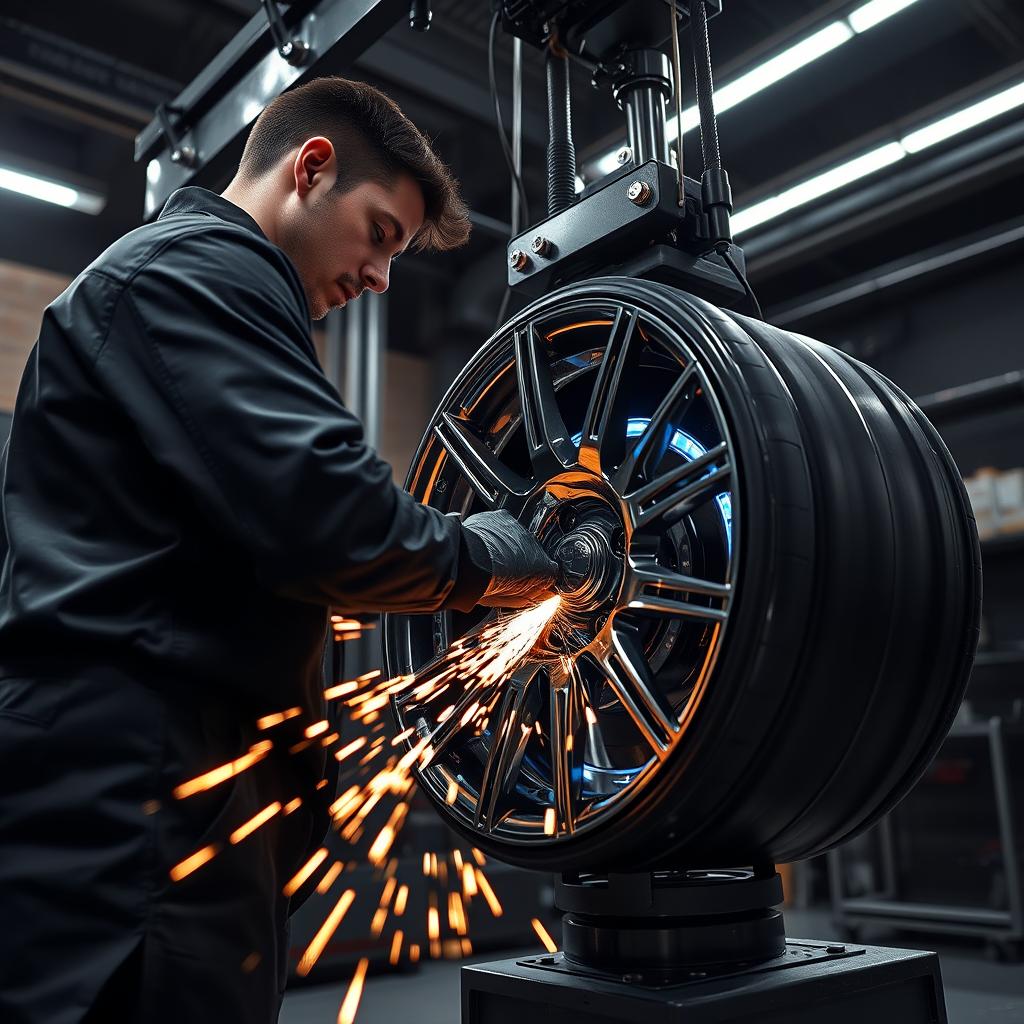
You hit a pothole, and now there's a vibration coming through the steering wheel that gets worse the faster you go. Or maybe you clipped a curb harder than you meant to and now the car just doesn't feel right. The question everyone asks next is the same: can this actually be fixed, or is it a new-wheel situation?
What a Bent Rim Actually Is
A bent rim is a wheel that's gone out-of-round or out-of-flat from an impact — the metal has deformed enough that the wheel no longer rotates in a perfectly true circle. That deformation shows up as vibration (worse at highway speed), sometimes a slow air leak where the tire bead no longer seats perfectly, and occasionally a visible wobble if you watch the wheel spin while the car is jacked up.
Can It Actually Be Straightened?
In most cases, yes. We use a hydraulic straightening press with computer-guided measurement to apply controlled force and bring the wheel back within factory runout tolerance — not just "looks straight," but measured against a real specification. The process corrects the majority of bent rims we see, from mild pothole bends to more significant curb-strike damage.
The exceptions are bends severe enough that the metal has been stressed beyond safe correction, or bends that come paired with a hairline crack. In those cases, straightening alone won't make the wheel safe, and we'll tell you honestly that replacement is the right call rather than sending out a wheel we wouldn't trust.
Why You Shouldn't Hammer It Out Yourself
There's no shortage of videos online showing someone hammering a bent rim back into shape in a driveway. We'd strongly advise against trying it. Hand-hammering applies uncontrolled, uneven force that can create micro-fractures in the metal — damage that isn't visible from the outside but weakens the wheel structurally. A wheel that looks straight after a hammer session can still fail later under load. A hydraulic press applies measured, even force and lets us verify the actual result against a real tolerance spec, which a driveway and a mallet simply can't do.
- A vibration that worsens with speed usually means a bend, not a balance issue
- A slow air leak with no visible puncture can point to a bent rim's tire seal
- Any wheel that's both bent and cracked needs welding assessed before straightening
- Runout should be measured and verified, not just eyeballed
Is It Safe to Keep Driving On It?
A mild bend causing a faint vibration is usually safe to drive on short-term, but should be corrected soon since it accelerates uneven tire wear and can worsen over time. A significant bend, a bend paired with an air leak, or any wheel that's also cracked should not be driven on until it's inspected. If you're not sure which category you're in, text us a photo — we'll give you a straight answer before you drive any further on it.
What Straightening Costs and Takes
Bent rim straightening starts at $99 per wheel and typically takes 1–2 hours, depending on severity. We inspect for hidden cracks before and after straightening, and every corrected wheel is measured against factory tolerance before it goes back on your car.
Feeling a Vibration? Let's Take a Look.
Text a photo for a fast quote, or call the shop directly.